
husenfulhu eats
honest, humble, and down-to-earth critic – bringing you the best and worst of food in the maldives.
honest, humble, and down-to-earth critic – bringing you the best and worst of food in the maldives.
by Ahanma, reporting from Tokyo
It’s a nippy October evening in Tokyo, and Sameer and I are trying to keep pace with our 70-something hosts through some interesting throughways between Ueno and Asakusa.
We arrive at the restaurant, Iidaya, which our hosts inform us is not the best for unagi, having been around for only 120 years. We take off our shoes and shuffle upstairs, where we don’t have to sit on the floor – a consideration on our hosts’ part. The menus are in Japanese with no English option; I can tell from the glint in Sameer’s eye that his hopes are already soaring. We both quickly agree that our hosts should do the ordering. Though we’re there for unagi on rice, I can’t help but notice the gas burners on every table.
Starters arrive, the main event of which is a bunch of fried little critters called dojō on a bed of shaved roots gently fried, called gobo – burdock. The curly little gobo shavings taste somewhere between potato and cassava chips, only just so slightly nutty. Equally interesting are the dojō, which are a kind of pond loach resembling rehi fried in a light batter. They taste like rehi too, though slightly fishier in the way freshwater and reef fish can be. We also get pickled cucumbers and lettuce, and miso soup with eel belly, all mild and subtle in flavour. Our hosts order us some 0% alcohol Sapporo beer to give us as authentic an experience as possible, and wait for Sameer to down his glass before asking whether he likes it. Sam-chan’s eyebrows shoot up to his scalp when our hosts choose that moment to tell him it’s alcoholic. They are quick to reaffirm that it’s not, however, and show us the label.
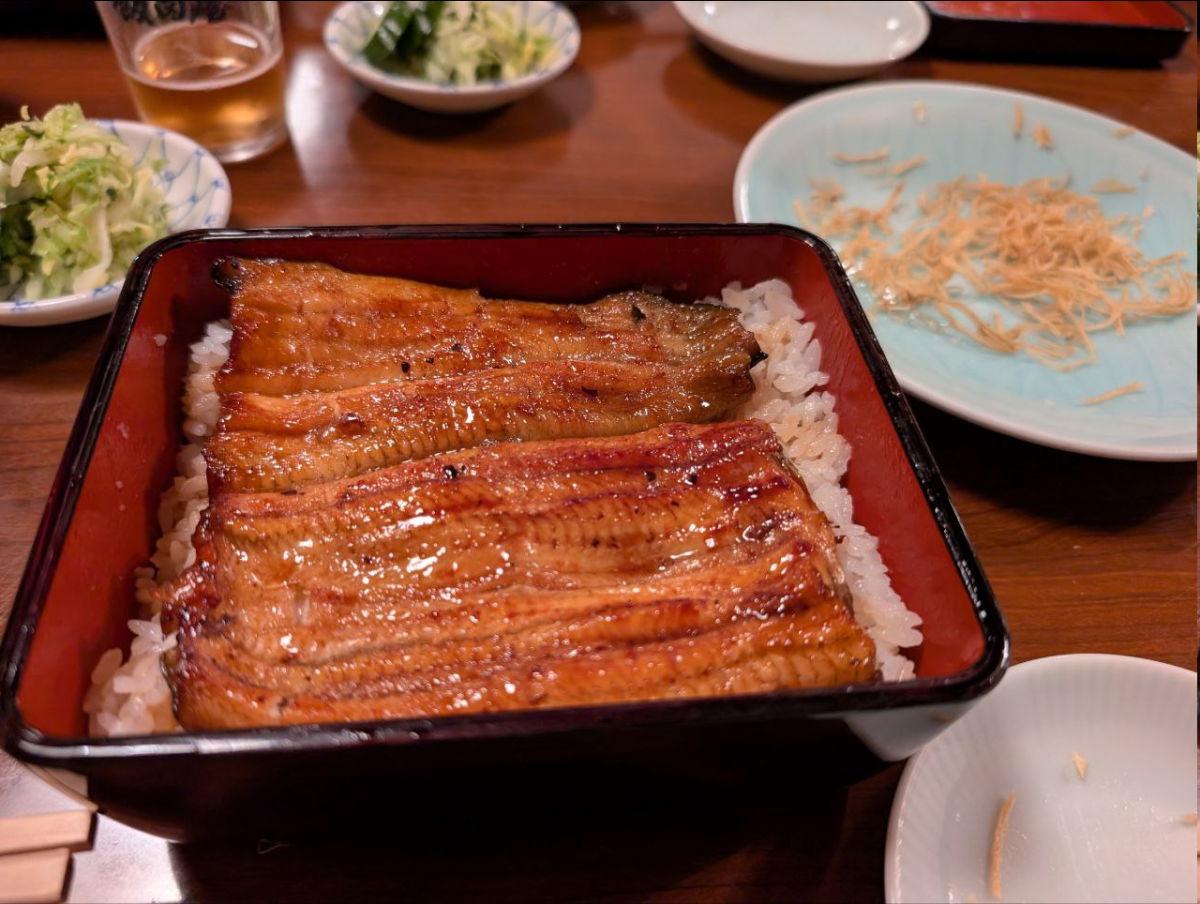
Our main course soon arrives, looking exactly as you’d expect it to – glazed unagi laid out over seasoned sticky rice in a lacquered box. The unagi is sweet and succulent. As Sameer and I dig in with enthusiasm, our hosts quickly remind us that this is above-average but not much more. It tastes great to me but I get into the spirit and declare it’s not that much better than what I’d eat at a good restaurant elsewhere, say in KL, which is met by a collective sniff. What we don’t usually get are the two seasoning powders, one of which mainly features “Japanese chilli” (sansho pepper), the other green shiso leaf, which usually accompanies fish dishes. The pepper seasoning is mild but tingly, adding more savouriness to the eel, while the shiso is much more striking with its bitter, aromatic, and unapologetically herbal character. They each provided very distinct counterpoints to the eel’s sweetness.
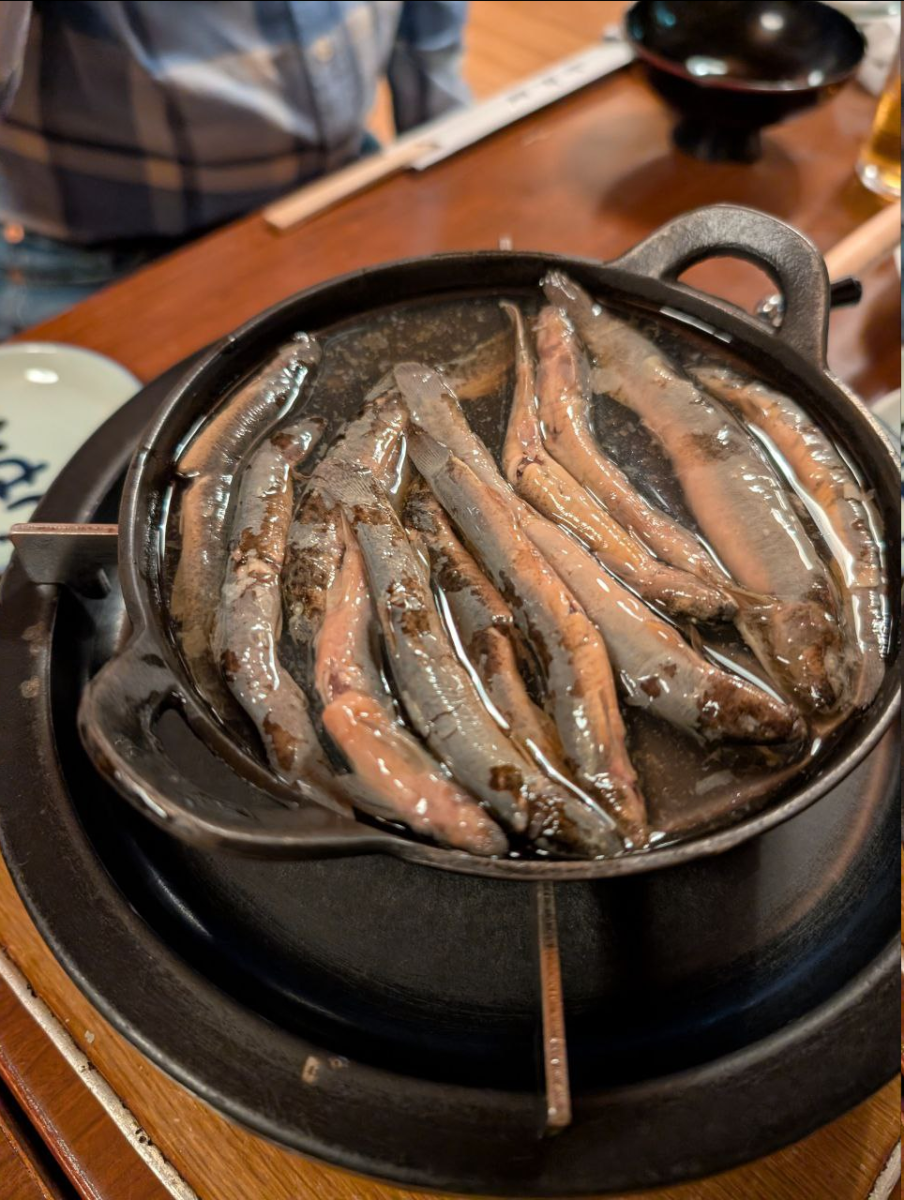
Sam-chan and I are satisfied but little did we know the best part of the meal was yet to come. Once the boxes and side plates are cleared, a small, shallow dish arrives, packed with uncooked, fully-grown dojō. We’re provided with two sauces – one smelling lightly of soy, the other sweet and tangy. Up went the dish on the burner, down came the sauce, and once the latter reached a simmer, chopped green onions were piled on the dojō. Once the onions had wilted into the sauce, our hosts served us our portions. It was a scrumptious interplay of softness and crunch (the dojō are quite bony), umami and the grassy pungency of the onion.
That this stole the show must have been apparent on our faces. Our hosts tell us that dojō were more plentiful in their youth when there were more streams and rivers in the area, which were later filled in as Tokyo developed. They likened it to the land reclamation craze of Maldives and wondered where our ecosystem will be when the dust, that is to say sediment, settles. The evening takes on a maudlin cast. I catch Sam-chan quietly studying the Sapporo label from the corner of one eye.