husenfulhu eats
honest, humble, and down-to-earth critic – bringing you the best and worst of food in the maldives.
honest, humble, and down-to-earth critic – bringing you the best and worst of food in the maldives.
it’s a beautiful afternoon in thoddoo and we’ve just been to the beach where women were bagging boli off the reef. closer to shore, children with nets were fishing for eels and octopuses in little rocky pools.
‘i want to come again tomorrow,’ a child told her parent as they left.
‘iraadhakurevviyyaa we will,’ says her mother.
‘iraadha nukurevviyas,’ the child says, shocking her mother.
in the island’s interior, sampaafulhu and i are trying to follow our nose – i picked up the scent of fresh hedhikaa a moment back, but i am having no luck finding it again.
‘maybe we should ask her,’ suggests samfa nodding towards a dhaththa in all black.
we do.
‘there are plenty around,’ the dhaththa says, smiling shyly. ‘if you go straight you’ll see a couple of cafes.’
we thank her and make a move only to find out that those places are out of hedhikaa.
as i take my phone to look up cafes, a motorbike putters into view. the dhaththa’s riding it, like many women on this island. she waves at us.
‘no hedhikaa, right?’ she asks. samfa nods.
‘there’s a good place, they’ll still have some. it’s a bit hard to find so follow me,’ she says.
and we follow her through the labyrinthine, tree lined streets of this island, an atoll in its own right. the dhaththa waits until we catch up to her, then she moves off and waits again.
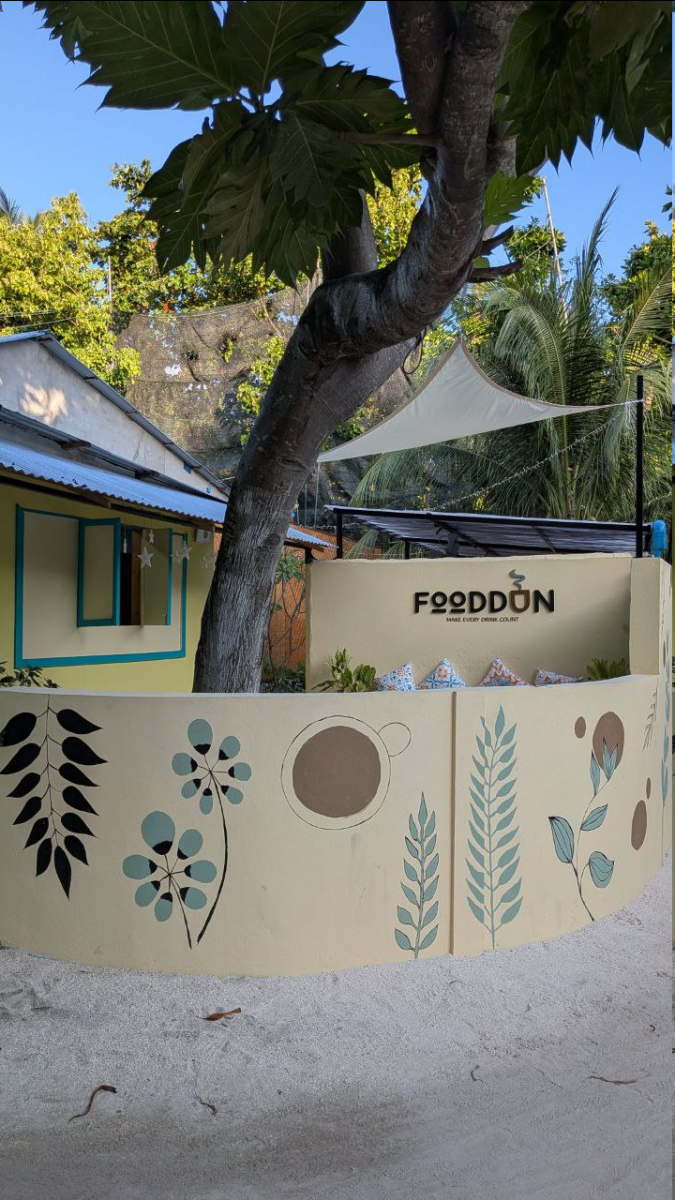
and so we find ourselves by a cafe, fooddun.
‘shukuriyya,’ says samfa to the dhaththa who smiles and motors away.
at the cafe, a south east asian woman and a young man are by the counter, on which stands a hedhikaa rack. the bajiyaa, keemiyaa, and boakibaa are quite generously proportioned. we order one of each, and i have a turmeric latte while samfa gets some tea.
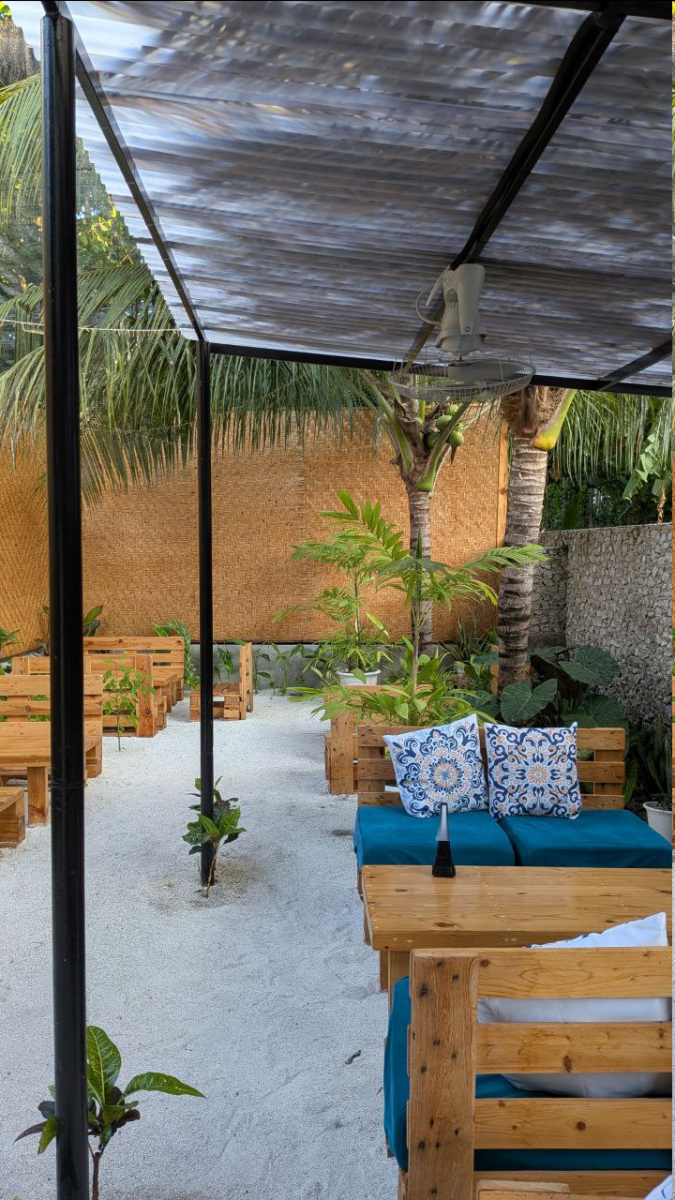
inside the cafe, the decor is very rustic with a sandy yard fringed with potted plants. small palms cast their shade near the centre while a coral-stone wall conceals us from the street. there’s a fly swatter on our table, and the cushions have lovely moroccan patterns on them.
‘isn’t this wonderful?’ says samfa.
‘it is, it is,’ i say. but i am in no mood for conversation, i really want my hedhikaa.
we’re the only customers here too, which might be an ill omen. it’s past 5pm tho, so maybe the hedhikaa crowd has already departed.
the young man brings our food and i dig in. the bajiyaa is crisp, its masgandu fresh and sweet from browned onions.
‘wow,’ i say. ‘my first good bite in thoddoo.’
samfa makes a face but her expression changes after she tastes her keemiyaa.
‘very good,’ she says. ‘very fiyaa but still. we’ve found an excellent spot.’
‘thanks to the dhaththa.’
i have some boakibaa too, it’s not bad but is a bit bland after the riot of flavour in the bajiyaa. i order one more.
the young man comes with my bajiyaa and tea and asks us how the hedhikaa is.
‘it’s very good,’ i tell him. ‘do you get a lot of customers?’
‘it’s mostly locals who come here, not guests,’ he replies.
‘who owns this place?’ asks samfa .
‘it’s a family business,’ he explains. ‘my mother and some relatives make the hedhikaa.’
‘do people from male come here?’ i ask.
‘sometimes, on the weekends.’
they should visit more often.
we pay the bill, which is the most reasonable of its kind we’ve seen on the island, and walk home.
we pass by some fancy looking guesthouses on the way.
‘some rich kids here, eh?’ i tell samfa.
‘you know,’ she replies. ‘everybody makes fun of the rich but really, all the revolutionaries were rich kids.’
‘huh, were they?’
‘when the poor come to power, there’s mass killings.’
‘get the rich in power, is that what you’re saying?’ i ask.
‘don’t put the poor in power. look at stalin.’